

I say this as a Mentor of emerging leaders, primarily Gen Z and Millennials.
I was born into a generation that wrote letters by hand, sent job applications by post, and built professional relationships slowly, face to face — long before digital platforms shaped how we are seen. It was a professional world without digital infrastructure — where visibility depended on proximity, being known within institutions rather than digital profiles or public self-expression. The emerging leaders I mentor have grown up with the internet as infrastructure — and yet, paradoxically, many approach professional visibility with a level of caution and discomfort that is striking for a generation so digitally fluent.
These are generations highly fluent in digital tools and social platforms. Yet when asked to build a presence on platforms like LinkedIn, the quiet resistance is immediate and genuine. Some find it exposing, others call it “cringe”, some are uneasy about sharing their age, surname, or being publicly associated with their work. These responses are not trivial, as they reflect a shift in how identity, risk, and visibility are understood.
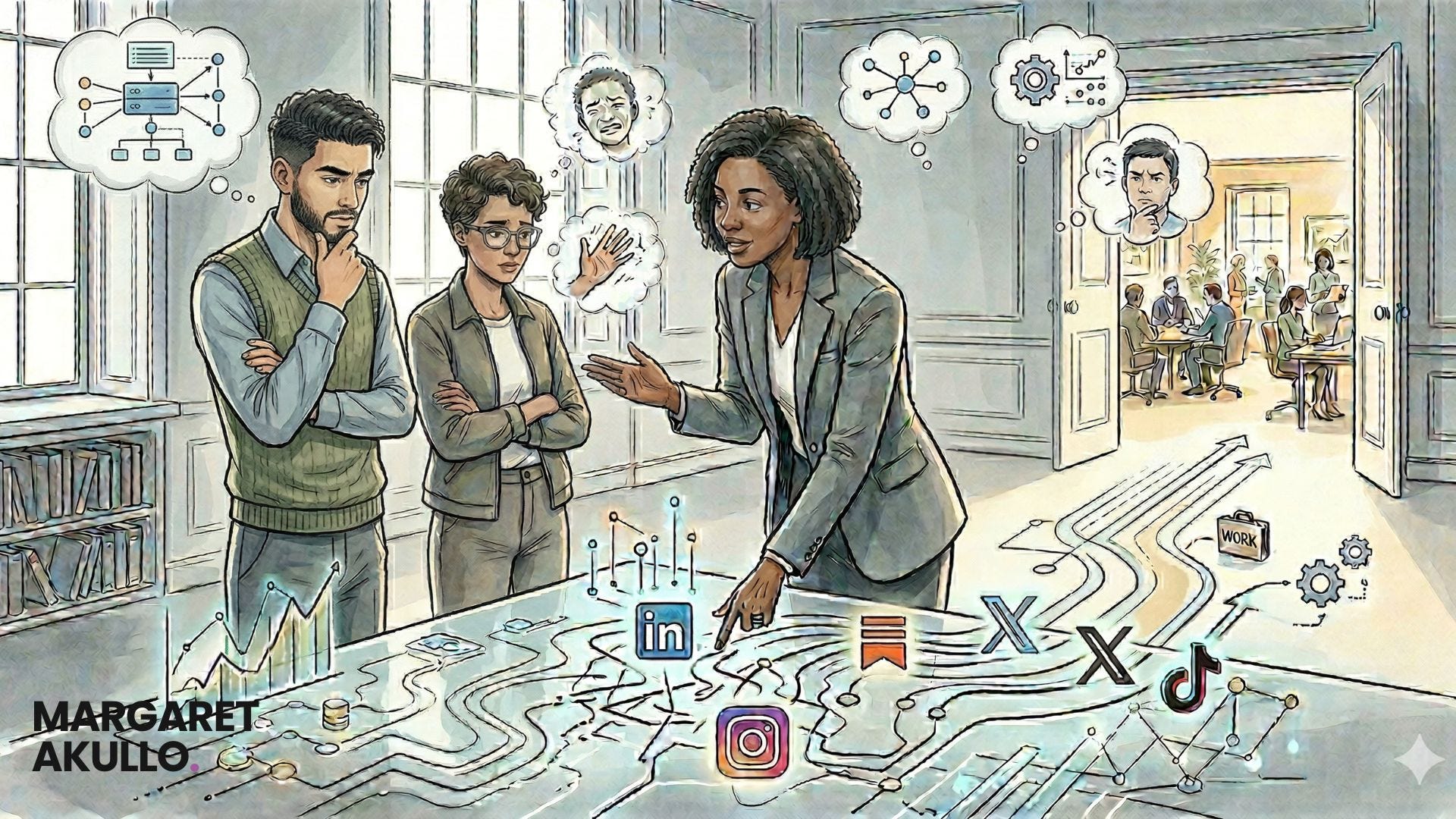
Gen Z and Millennials are navigating a digital environment shaped by permanence, algorithmic exposure, online harassment, and reputational risk at scale. Their caution is not reluctance without cause; it is informed behaviour.
From my experience, many young professionals experience a real disconnect between personal identity and professional identity constructed in public view. To them, the idea of presenting a curated professional self can feel performative — even inauthentic. At the same time, the labour market has evolved faster than this mindset.
Recruiters increasingly rely on digital presence as a first point of contact — with platforms like LinkedIn reporting that the majority of hiring managers use online profiles in candidate evaluation. Digital absence can therefore be interpreted — fairly or not — as a lack of readiness or engagement.
This is where the tension lies.
My role is not to override that concern. It is to reframe it. Professional visibility should not be viewed as performance, but as presence. In a digital and competitive labour market, presence is often the entry point to opportunity. It allows one’s work, thinking, and direction to be understood before you are in the room.
Platforms like Substack, LinkedIn and Instagram, when used with intention, can function as professional infrastructure. A profile, a portfolio, a piece of writing should not be viewed as acts of vanity. They are signals, and they communicate experience, clarity, capability, and trajectory.
What I encourage emerging leaders to understand is this: visibility does not require self-exposure without boundaries. It requires intentionality — and you decide what to share, how to frame it, and where to draw the line. The challenge, then, is not generational difference alone. It is alignment — between capability, identity, and visibility.
My responsibility as a Mentor is not to tell emerging leaders how things were done. It is to help them navigate how things are — without losing who they are. This is because professional visibility, on their own terms, is not a compromise of personal identity. It is a strategic extension of it. As a Gen X mentor, this has required growth on my part. It has challenged my assumptions about visibility and professionalism, and pushed me to understand a generation navigating a fundamentally different reality. Mentorship, in this context, is not one-directional — it becomes an exchange.
At its core, the Mindset-to-Output Mentorship Programme is designed to build alignment.