

My friend had come to visit Vienna (Austria) from London (UK), and somehow, instead of showing her around as a resident, I found myself becoming a tourist too.
We signed up for a Vienna Photo Walk, a half-day stroll through the historic centre where the brief was simple: wear something fabulous, relaxed, or vintage, walk through Vienna, have your photographs taken, and just have fun.


We arrived ready to play our part in this slightly theatrical version of the city. We stopped at some of Vienna’s most recognisable spots, posing against grand buildings and elegant streets I had walked past countless times before. That day, I was looking at them differently. Perhaps it was the photographer. Perhaps it was simply the experience of being deliberately present in a place where I normally move through life with somewhere to go.
Between photographs, we played card games, talked, laughed, and gradually got to know one another. By lunchtime, the nine of us had become something closer to a temporary community. Then I noticed something that made the day feel strangely familiar.
My friend and I were both reading books about the Black diasporic experience. One was Brit(ish): On Race, Identity and Belonging by British-Ghanaian writer Afua Hirsch, the other Travelling While Black by Kenyan writer Nanjala Nyabola. We hadn’t planned it, but the themes in those books didn’t stay on the page.
As we walked through Vienna, questions of identity, belonging and visibility became part of how we experienced the day as two Black women navigating a city that was familiar, yet still felt different through a diasporic lens. We were two Black women in a Viennese park, reading two books that were essentially asking the same questions we were living that afternoon: What does it mean to be British, African or Caribbean? What does it mean to move through places where you are visibly part of the minority? And where, exactly, does belonging begin?
Nothing dramatic happened that day, and perhaps that was the point. Most days, belonging doesn’t announce itself with an incident. Sometimes it sits quietly in the fact of being the only one, or the only two. Sometimes it is the awareness that your experience of a place is shaped by histories, identities and questions that may not be visible to everyone around you.
That day, I was simply a tourist in a city where I live. Resident. Visitor. Ugandan. British. Black. Diasporan. My friend was visiting from London, with her own story of belonging: British, Jamaican heritage, Black. None of these identities cancelled out the others. They simply existed alongside each other.
Perhaps that is what being diasporan can feel like. Not quite choosing between places, but learning to inhabit the space between them.
And sometimes, it takes dressing up, walking through a city on a photo walk with eight other women, and becoming a tourist for a day to notice where you live.
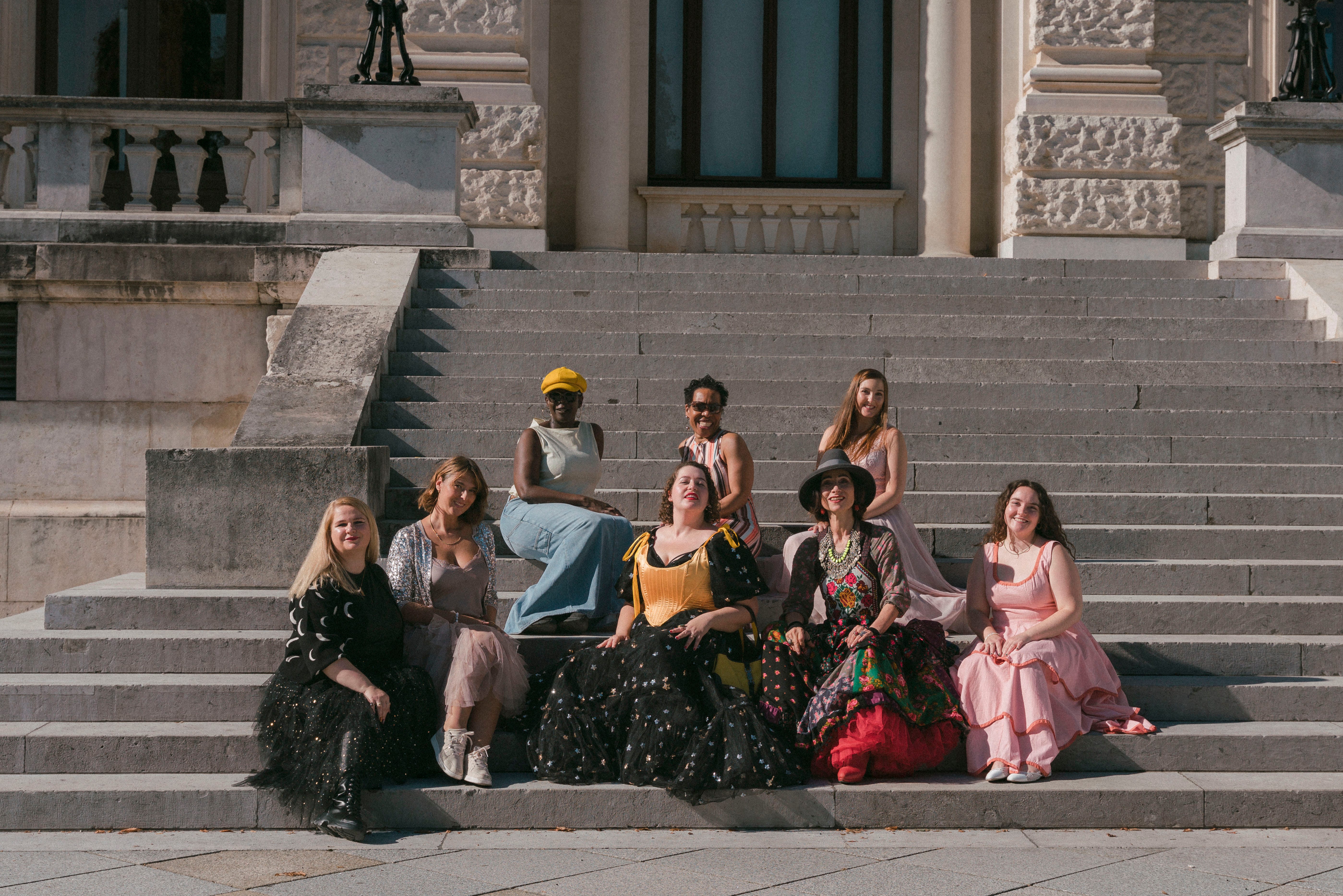
Photo credit: Maria Lelyuk